project management
Concept
Project planning
Work Breakdown Structure(WBS)
- depicts information about tasks and details in terms of subtasks
- helps to divide the total work into smaller, well-defined unites
- includes estimates in man hour/day/month
- tasks should be well-defined - clear when the task can be considered done
Milestones
- end of a stage indicating significant progress
- high level plan
Buffers
- time set aside to absorb unforeseen delays
- should be explicit - don’t inflate tasks estimates to create hidden buffers
- explicit buffers make it easier to detect incorrect effort estimates
Issue trackers
- tool to keep track of assignments and progress
Gantt charts
- tasks are horizontal bars
- tasks over time
- shows subtasks and milestones/deadlines
PERT charts
- Program Evaluation Review Technique(PERT)
- directed graph of tasks
- shows the sequence of tasks, which tasks can be done concurrently
- critical path - shortest completion time
Team structure
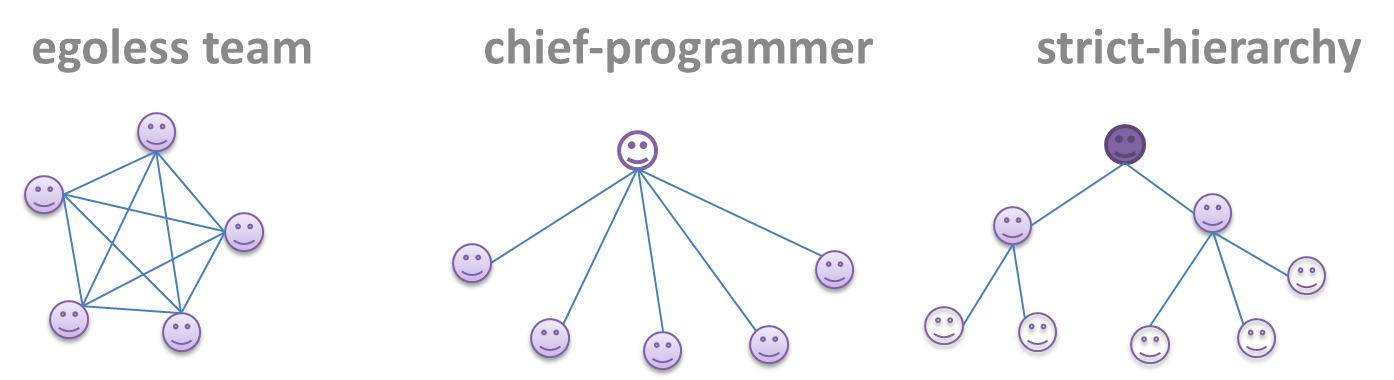
Egoless team
- each team member is equal in responsibility and accountability
- concensus is required for any decision
- no authority to resolve conflicts
Cheif programmer team
- one authoritative cheif programmer
- one person makes major decisions, other members are domain specialists
- success depends on cheif programmer, needs good managerial skills
Strict hierachy team
- strict organization
- each member does their assigned tasks and reports to one boss
- better for larger projects to reduce communication overhead