HTTP
Summary
HTTP status codes
200 Ok
301 Moved Permanently
304 Not Modified
403 Forbidden
404 Not Found
500 Internet Server Error
HTTP versions
| Version | Features |
|---|---|
HTTP/1.0 | - TCP - 1 connection per object |
HTTP/1.1 | - TCP - persistent connection - pipelining |
HTTP/2 | - TCP - multiplexing |
HTTP/3 | - QUIC/UDP |
Concept
HyperText Transfer Protocol(HTTP)
- application layer protocol
- apps request and recieve web resources, 1 request per resource
- uses TCP in the transport layer
for
cs2105HTTP refers to HTTP/1 and HTTP/2 which use TCP, HTTP/3 uses UDP/QUIC
Uniform Resource Locator(URL)
- addresses web objects, ie. html files, images
HTTP request
GET /~cs2105/demo.html HTTP/1.1\r\n
Host: www.comp.nus.edu.sg\r\n
User-Agent: Mozilla/5.0\r\n
Connection: close\r\n
\r\n
<body>
HTTP response
HTTP/1.1 200 OK
Date: Wed, 01 Jul 2015 08:47:52 GMT\r\n
Server: Apache/2.4.6 (Unix) OpenSSL/1.0.1m\r\n
Accept-Ranges: bytes\r\n
Connection: Keep-Alive\r\n
Content-Length: 73\r\n
Content-Type: text/html\r\n
Keep-Alive: timeout=5, max=100\r\n
\r\n
<!DOCTYPE html>
<html lang="en">
...
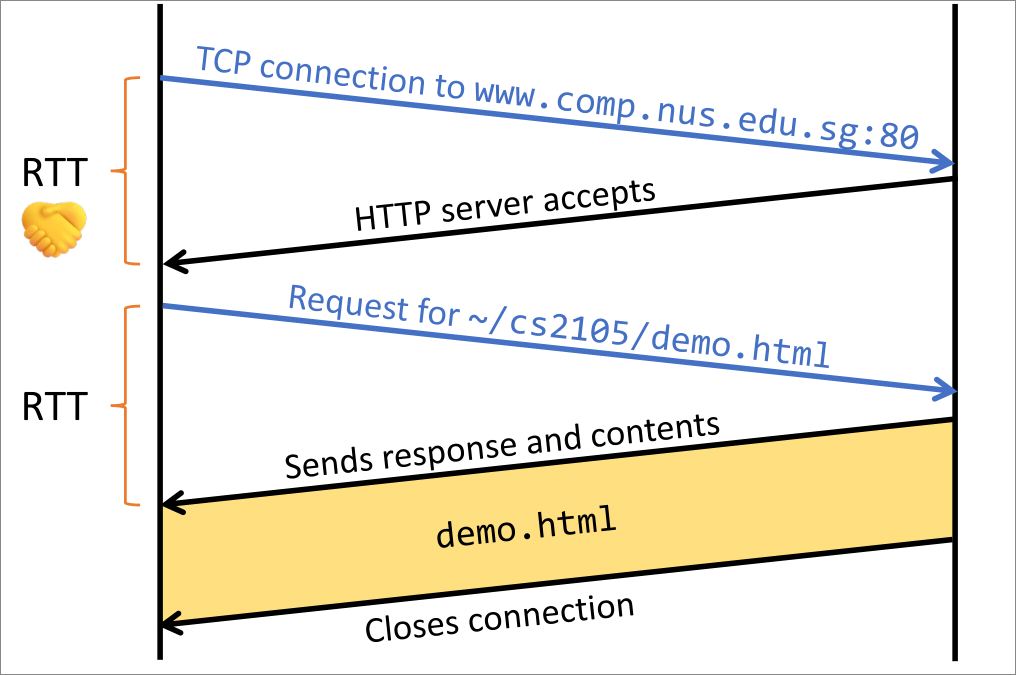
HTTP/1.0
- single TCP connection for each resource
HTTP/1.1
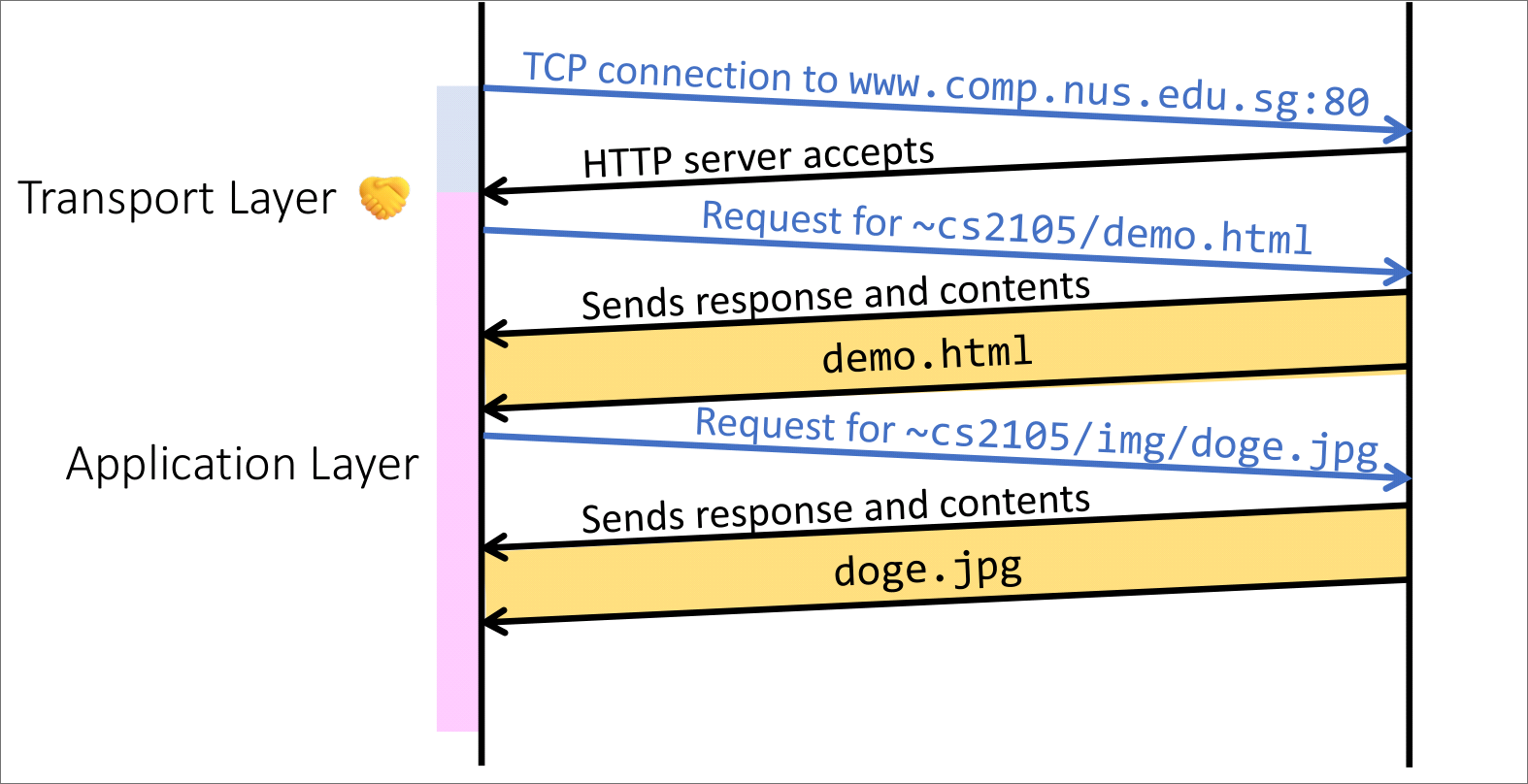
Persistence
- single TCP connection, with the server
- removes overhead from RTT for every TCP connection
- sequential: waits for response before sending next request
persistence is possible only if the hostname remains the same
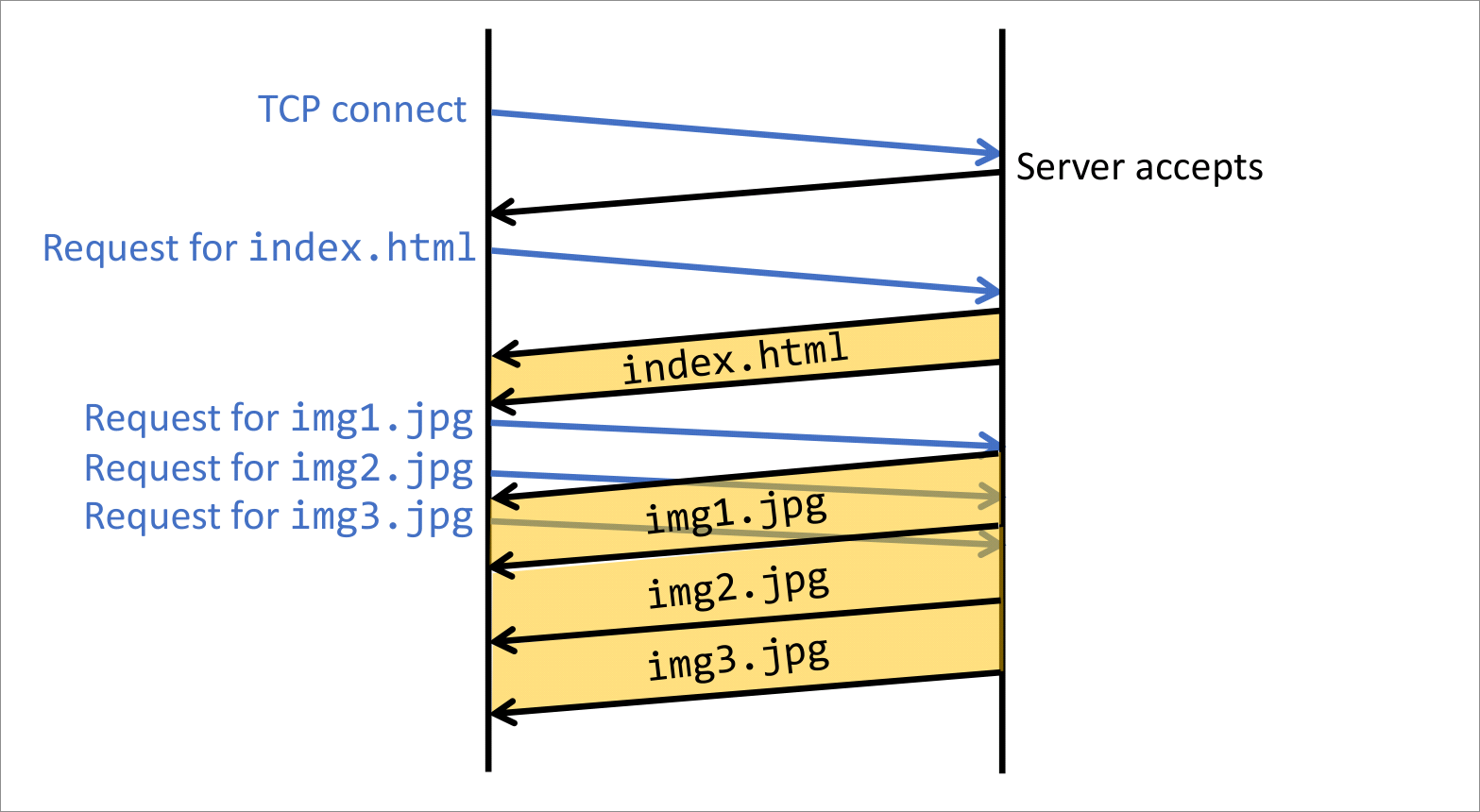
Pipelining
- requests are made before recieving responses from older requests
- requires a persistent connection
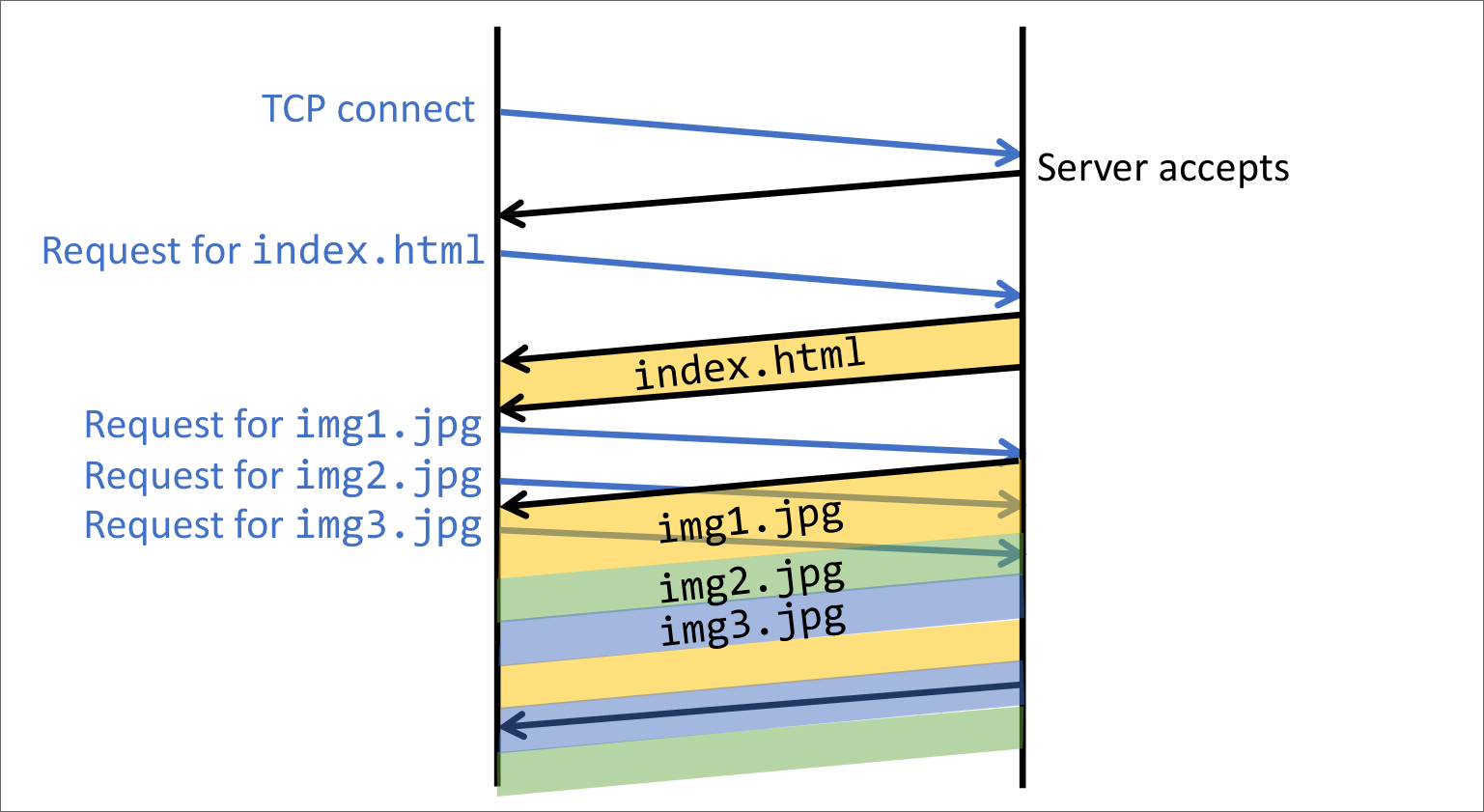
HTTP/2
- multiplexing
- response can come back in any order, maybe even interleaved
Browser caching
Statefulness
- HTTP is stateless, ie each HTTP session is standalone
- use cookies to maintain state between sessions
Caching resources
- images
- scripts(JS)
- CSS
- use conditional get requests, check if cached versions are still up to date with the server’s version
- avoid sending unecessary data