design patterns
Summary
| Pattern | Category | Intent | Key Idea | Pros | Cons |
|---|---|---|---|---|---|
| Singleton | Creational | Ensure a class has only one instance and provide global access to it | A single shared instance is controlled via a static access method | Controlled access, saves resources | Hard to test, global state can lead to tight coupling |
| Abstraction-Occurrence | Structural | Separate different instances of a concept from a single abstraction | One abstract object represents shared data, while occurrences represent specific cases | Reduces duplication, improves consistency | Can add complexity, harder to understand initially |
| Facade | Structural | Provide a simplified interface to a complex subsystem | A wrapper class hides complexity and exposes a unified interface | Easier to use, reduces dependencies | Can become a “god object” if overused |
| Command | Behavioral | ||||
| MVC (Model-View-Controller) | Architectural | Separate application into Model, View, and Controller components | Model = data, View = UI, Controller = logic handling input/output | Clear separation of concerns, easier maintenance | Can be overkill for small apps, added complexity |
| Observer | Behavioral | Define a one-to-many dependency so observers update automatically | Subject notifies all registered observers when its state changes | Decouples components, supports event-driven systems | Can cause performance issues or unexpected updates if misused |
Concept
Software design patterns
- elegant reusable solution to a commonly recurring problem
- patterns refined over time
- provide a high-level vocabulary to talk about design
Structure
- context - situation where the initial problem was encountered
- problem - difficulty to be resolved
- solution - core solution
- anti-patterns - incorrect/inferior alternatives
- consequences - pros and cons of the pattern
Difference with design principles
- principles have varying degree of formality -> rules, opinions, rules of thumb, observations, and axioms
- principles are more general and have wider applicability, but with greater overlap
Singleton pattern
- context - some classes should only have one instance
- problem - normally classes can be instantiated multiple times with the constructor
- solution - make the constructor private, public static method is used to access the sole instance
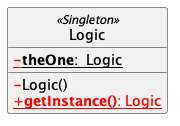
java
class Logic {
	private static Logic theOne = null;

	private Logic() {
		...
	}

	public static Logic getInstance() {
		if (theOne == null) {
			theOne = new Logic();
		}
		return theOne;
	}
}
- pros
- easy to apply
- effective with minimal extra work
- cons
- singleton object acts like a global variable -> increases coupling
- difficult to replace with stubs when testing
- carries data across tests, even when aiming for independence
so only use the singleton pattern when there are real negative consequences to creating multiple instances
Abstraction Occurance pattern
- context - alot of similar entries that appear to be occurences/copies, share alot of common information, but differ in significant way
- problem - using a single class would lead to data duplication by all instances -> inconsistencies if duplicates are not updated consistently
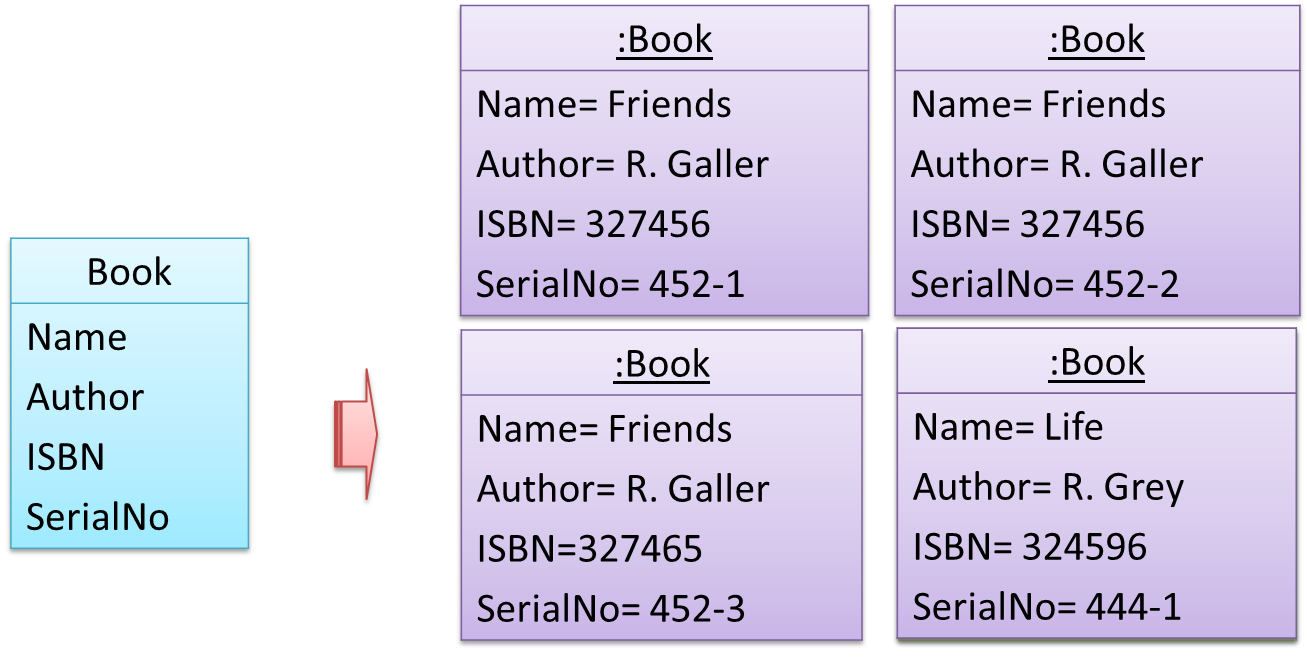
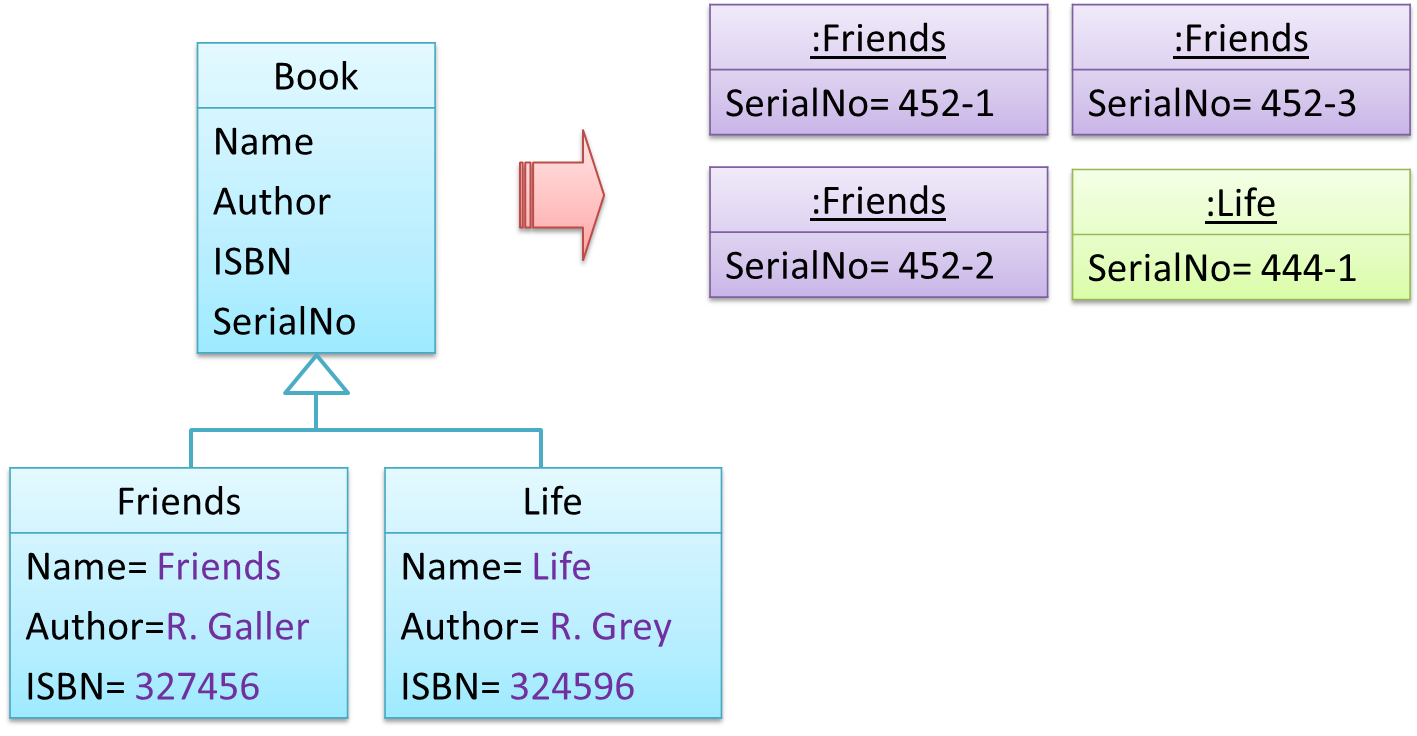
- anti-pattern - make subclasses with the data hard-coded into the class -> alot of classes, one for each variant
- solution - separate into 2 objects, representing the shared information and unique information
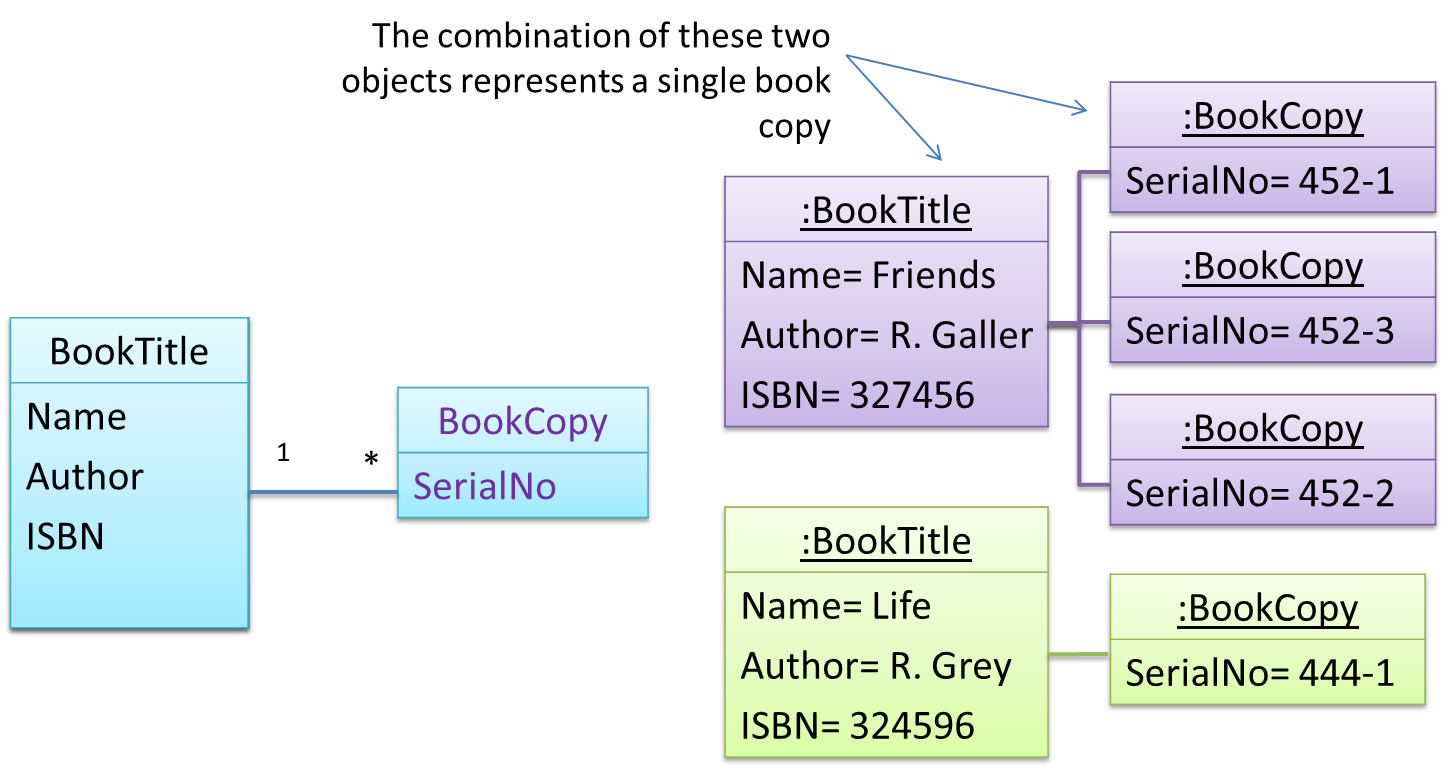
- general pattern

Facade pattern
- context - need to access functionality deep inside some other component
- problem - access should be provided without exposing internal details (abstraction)
- solution - façade class that handles all accesses to the component internals
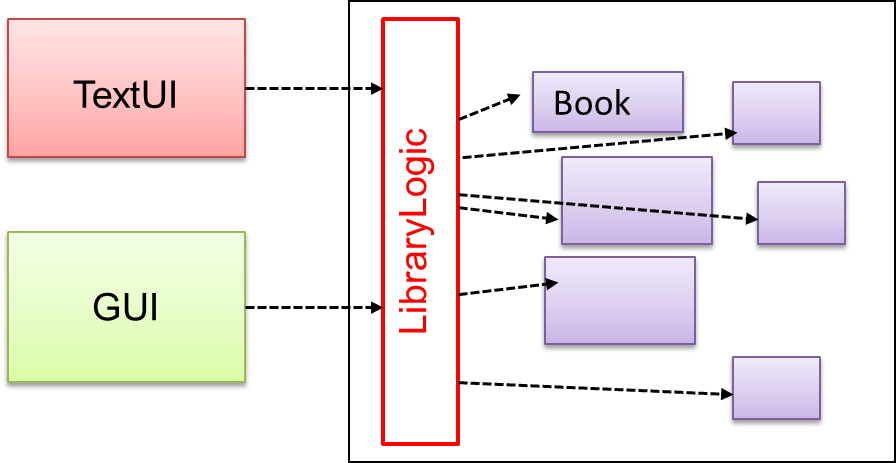
Command pattern
- context - system might need to execute a number of commands, each doing different tasks
- problem - some part of the code should execute the commands without having to know each command type
- solution - general
Commandclass that can be executed without knowledge of its type
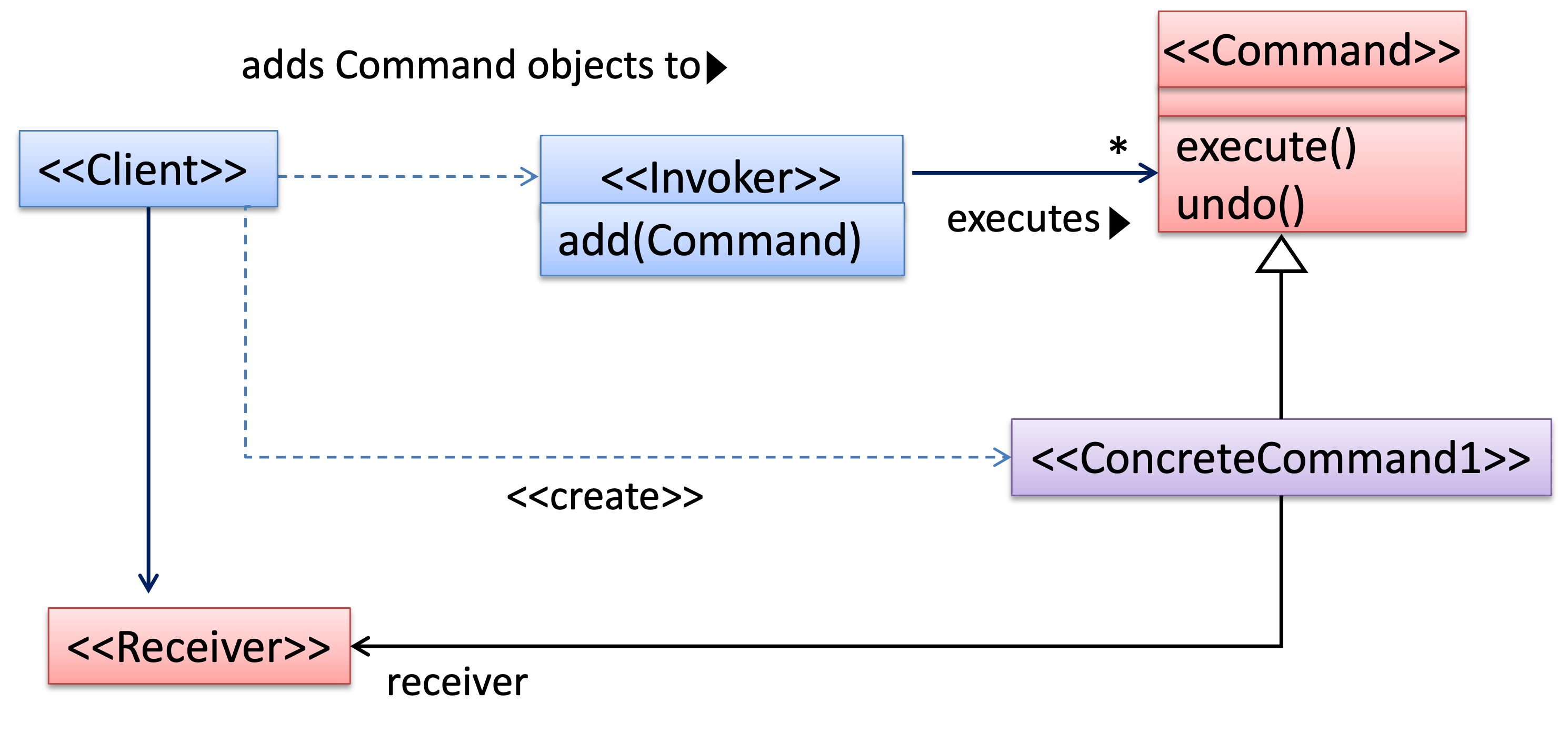
related to the Dependency Inversion Principle
Model View Controller(MVC) pattern
- context - applications support storage/retrieval of into, display of info and changing the stored information based on inputs
- problem - high coupling can result from the interlinked features
- solution - 3 part solution to decouple data, presentation and control logic
- view - display and interacting with the user, pulls data from model
- controller - detect UI events and performs the follow up action, updates model/view
- model - store and maintain data, update view if needed
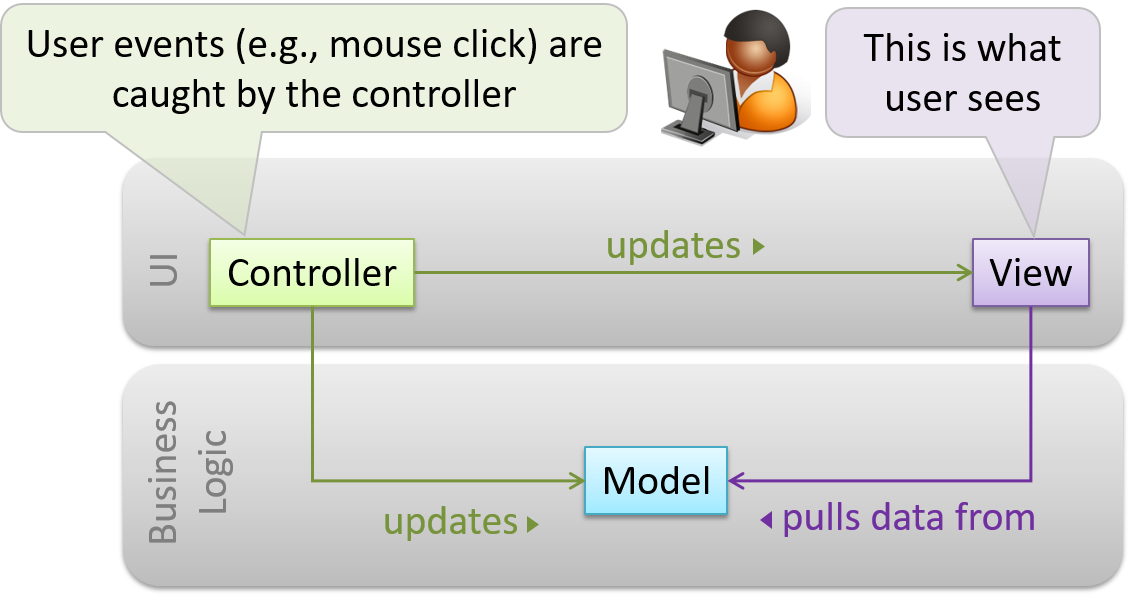
a simple app might combine view and controller into one UI class
Observer pattern
- context - objects may be interested in observing another object for changes
- problem - the observed object doesn’t want to be coupled to objects observing it, ie. the observed object shouldn’t have to update each observer in their specific ways
- solution - couple to an observer interface, observable object is only dependant on the interface and not each observer

java
// Observable
public void addObserver(Observer o) {
	observerList.add(o);
}

private void notifyObservers() {
	// for each observer in the list
	for (Observer o: observerList) {
		o.update();
	}
}
Combining design patterns
- patterns are usually embedded in a larger design
- remember to maintain the purposes of each pattern when combining
Other patterns
- creational: about object creation, separating the operation of an application from how its objects are created
- Abstract Factory, Builder, Factory Method, Prototype, Singleton
- structural: about the composition of objects into larger structures while catering for future extension in structure
- Adapter, Bridge, Composite, Decorator, Façade, Flyweight, Proxy
- behavioral: define how objects interact and how responsibility is distributed among them
- Chain of Responsibility, Command, Interpreter, Template Method, Iterator, Mediator, Memento, Observer, State, Strategy, Visitor