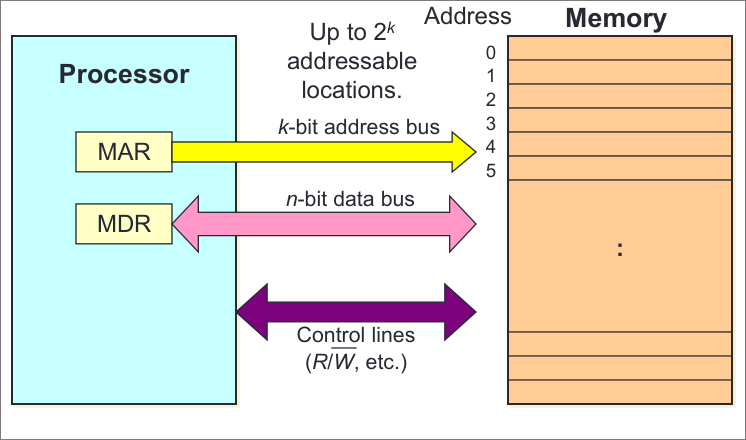
memory circuits
Summary
Random access memory(RAM)
- static RAM -> use flip-flops
- dynamic RAM -> use capacitor charges
Memory unit
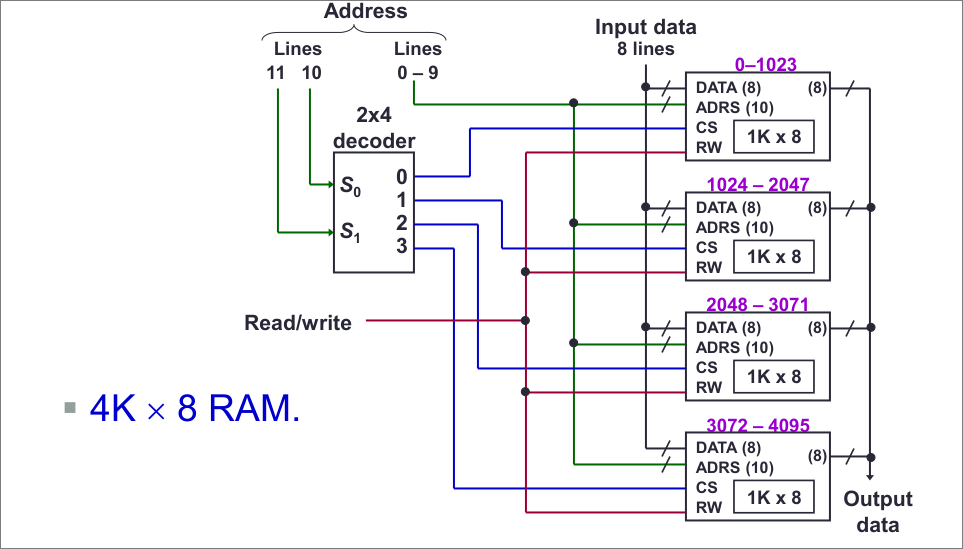
- combined in an array to form larger units
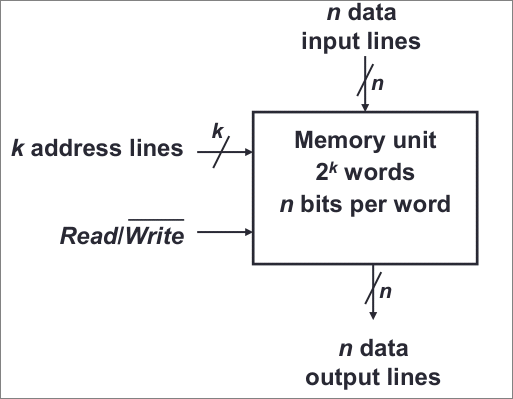
Memory arrays
- uses a decoder on the more significant bits of the address to index the appropriate cell for the next level
Concept
States
- each flip-flop is responsible for 1 bit
Memory properties
- compromise between
- fast excess
- large capacity
- economical cost
- non-volatile
Data transfer
- how the CPU indexes and reads from/writes to memory